There are people who think making a pancake is simple.
Flour. Milk. Eggs. Pan. Done.
We respect their optimism.
At Dutch Pancake Masters, however, we have spent a considerable amount of time studying what separates a pancake from a really good traditional Dutch pancake. The thickness. The golden surface. The slightly crispy edge. The soft centre. The exact moment it needs to leave the pan.
We have studied this extensively. Purely for scientific purposes, obviously.
So put on your imaginary lab coat. It’s time to dissect the perfect Dutch pancake.
Finding the Perfect Batter
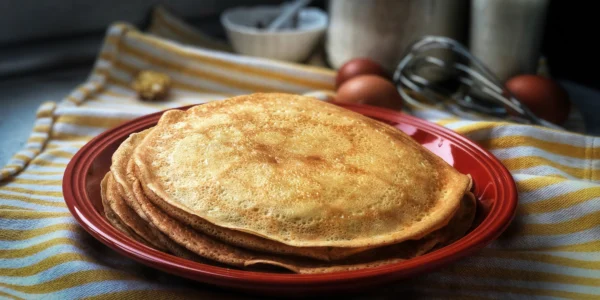
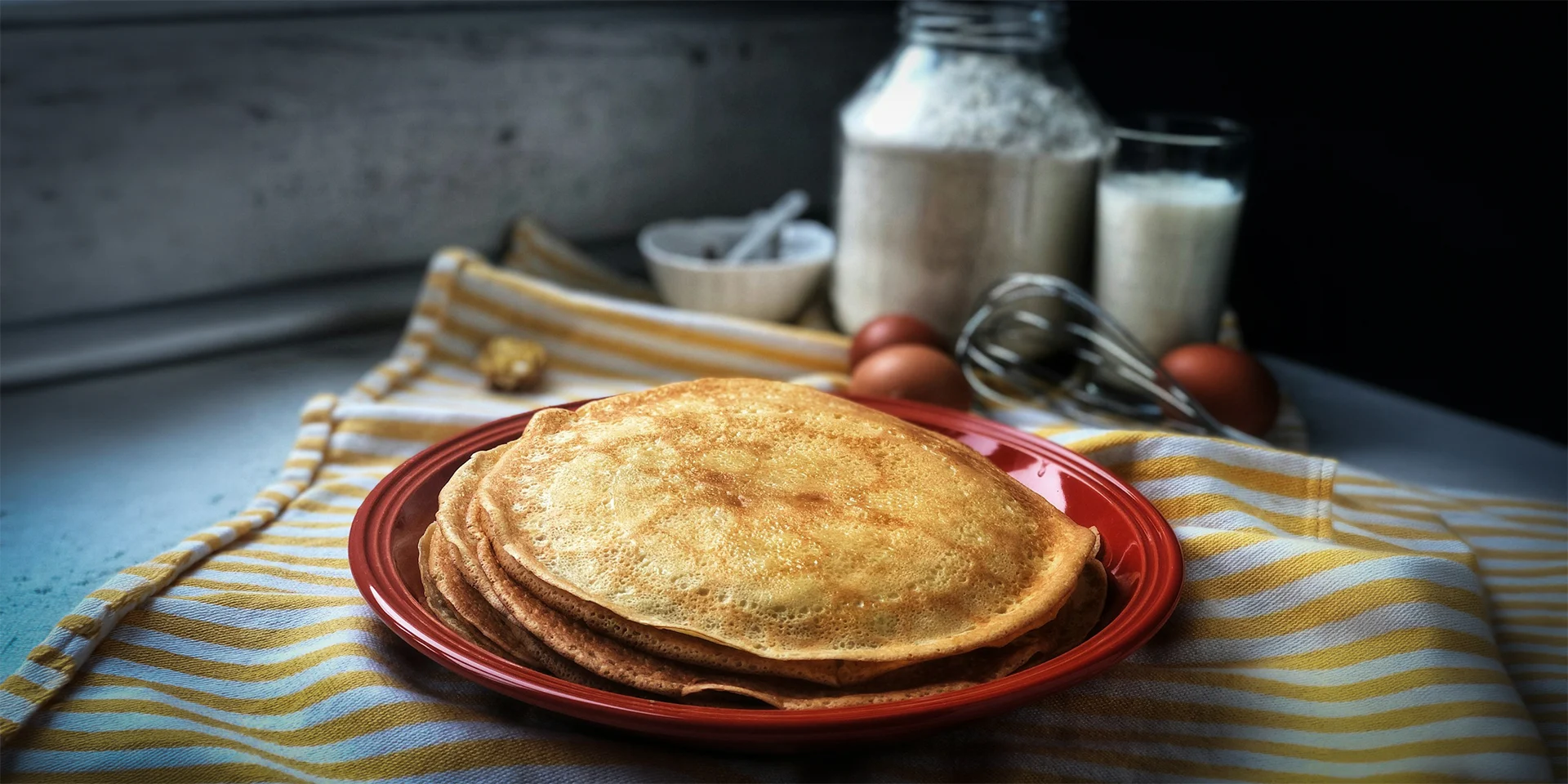
Every good experiment starts with a formula, and pancakes are no different. Flour provides the foundation, eggs help give the pancake its structure and milk provides the liquid that turns the whole thing into batter rather than a regrettably large omelette.
The balance matters because a traditional Dutch pancake needs to occupy a very specific place in the pancake universe. It should be thinner than the thick, fluffy pancakes you might know from an American breakfast, but substantial enough to carry ingredients such as apple, cheese or crispy bacon without falling apart halfway to your mouth.
Too thick and you’ve lost that characteristic Dutch pancake texture. Too thin and you’re heading towards crêpe territory.
A serious scientific boundary, clearly.
The Heat Is On
Now we enter the laboratory. Or, as our chefs insist on calling it, the kitchen.
When pancake batter meets a properly heated pan, several things start happening at once. Moisture begins to evaporate, the structure of the batter starts to set and the surface begins to brown.
That beautiful golden colour isn’t just there to look good on Instagram. Heat triggers browning reactions between components in the batter, helping create the deeper flavours and aromas we associate with freshly cooked food.
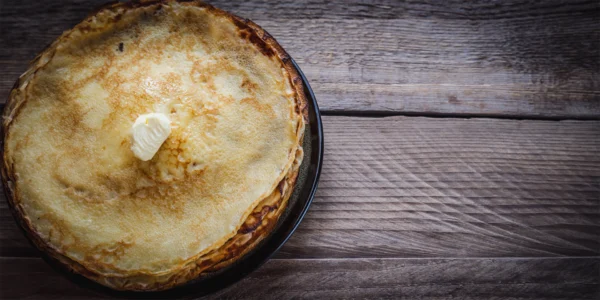
Meanwhile, the thin outer edge of the pancake loses moisture more quickly than the centre. That’s exactly what we’re looking for: a slightly crispy, golden edge surrounding a softer centre.
Too little heat and your pancake stays pale and sad. Too much and you’ve discovered carbon.
Neither is ideal.
The Flip
This is where years of pancake research finally pay off.
As the first side cooks, watch the surface. The edges begin to turn golden, the wet shine starts disappearing and tiny bubbles and pinholes appear across the top. Those little signs tell you that the structure is setting and you’re approaching the critical moment.
Now you have two options.
The scientifically sensible method is to slide a spatula underneath and turn the pancake in one quick, confident movement.
Perfectly respectable.
The ultimate Master technique, however, is to throw ’em in the air like you just don’t care.
Does launching your pancake above the stove improve its flavour?
No.
Does it offer a measurable advantage in texture?
Also no.
Does it make you look approximately 87% more impressive?
According to the Dutch Pancake Masters Department of Pancake Science: absolutely.
Size Really Does Matter
A traditional Dutch pancake isn’t supposed to disappear underneath a mountain of other pancakes. It gets the plate to itself, and for good reason.
Its large surface gives us room to create that balance between the golden exterior, soft centre and toppings. It also means ingredients can be spread across the pancake rather than piled into one unfortunate spot in the middle.
Which brings us to another highly sophisticated field of research.
Topping distribution.
Whether we’re working with apple, cheese, crispy bacon or something considerably more loaded, a good pancake needs balance. You shouldn’t have to eat four bites of naked pancake before suddenly encountering the entire bacon population in bite number five.
We cannot confirm that our chefs use rulers.
We cannot confirm that they don’t.
The Final Analysis
So, after years of highly delicious research, what have we learned?
The perfect traditional Dutch pancake needs balanced batter, the right amount of heat, a golden edge, a soft centre, well-distributed toppings and impeccable timing at the flip.
There is chemistry involved. There is physics involved. There is experience involved.
And occasionally, there is a pancake flying through the air.
Our research is far from complete. There are still toppings to test, pancakes to flip and important questions to answer.
Further research is required.
Fortunately, we conduct it daily.